

Index
Principal Investigator
.
.
Colourful Insect Genomics group
Researchers and Technicians

Johanna Mappes
Principal Investigator
Professor of Ecology
Academy Professor
I have always been curious about how things work in nature, and I really enjoy problem-solving and experimental design.
My main research focus is to understand how prey traits are shaped by their predators, especially with regards to colour.
I often use colourful animals as models of adaptation because colour is deeply connected with biotic and abiotic interactions. Colour mediates so much of communication, from attracting mates to deterring hungry predators. But colour is also a physical property involved with thermoregulation, immunity, and environmental shielding.
Because colours interact with the environment in predictable and specific ways, they provide an excellent opportunity to relate environmental changes with organisms and their capacity to adapt in a variable world.
Contacts
email
Google Scholar
ResearchGate
tel. +358405372263
Organismal and Evolutionary Biology Research Programme,
Faculty of Biological
and Environmental Sciences.
Viikki Biocenter 3
PO Box 65
FIN-00014 Helsinki University
Finland
Social Media

Pauline Albert
Doctoral Researcher
I am an evolutionary genomicist interested in the genetic mechanisms lying behind phenotypic diversity and adaptation, especially in insects. I’m currently doing a PhD in Melanie Brien’s group Colourful Insect Genomics.
My PhD focuses on Callimorpha dominula, the scarlet tiger moth, as I am trying to decipher the genes and regulatory networks responsible for the species’ colour polymorphism, variable melanisation, and iridescence.
Contacts
email
Michal Barták
Doctoral Researcher

I am interested in the ecology and evolution of moths and butterflies.
Here, I will focus on whether the melanic patterns of the wood tiger moth represent thermal adaptation to the environment, linking genomic data to phenotype, function, and fitness.
Contacts
email
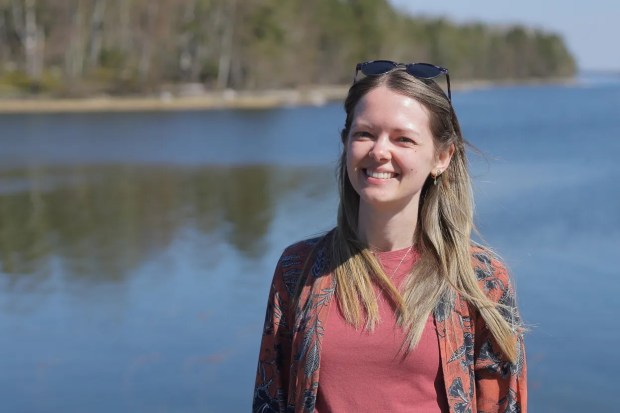
Melanie Brien
Academy Research Fellow
I am interested in the evolution and genetic basis of colour pattern traits in Lepidoptera. In the EEI group, I studied the mechanisms producing colour polymorphism in the wood tiger moth.
Currently, I am an Academy Research Fellow in the Department of Organismal and Evolutionary Biology – studying more broadly how phenotypic diversity emerges and is maintained across populations using tiger moths as model species. My new group’s website can be found here: Colourful Insect Genomics
Contacts
email
Google Scholar
Professional Website
Social Media
Theo Brown
Doctoral Researcher

I am a behavioural ecologist interested in the factors which influence an animal’s foraging decisions.
My current research focuses on the different ways moths might deter predators using visual signals. To achieve this, I am using a new touchscreen operating system where we can train predators (blue tits) to attack simulated prey. This technology provides the opportunity to empirically test previously theoretical principles on wild birds.
Contacts
email

Vasiliki Mantzana-Oikonomaki
Postdoctoral Researcher
I am an evolutionary biologist interested in how genetic variation gives rise to phenotypic diversity, particularly in animal colouration, and how these traits shape interactions between species. My research combines genomic and evolutionary approaches to understand the processes connecting genotype, phenotype, and adaptation.
During my PhD, I investigated the genetic basis of colour polymorphism in poison frogs, focusing on pigment biology and the evolution of warning colouration. I am now starting as a postdoctoral researcher in the Ecology and Evolution of Interactions group at the University of Helsinki, where I will study the genetics of melanin-based colouration in the wood tiger moth. I aim to understand how colour variation develops, how it is maintained within populations, and how it relates to ecological interactions.
Contacts
email

Alma Oksanen
Laboratory Coordinator
I started working as a Laboratory Coordinator in the Ecology & Evolution of Interactions Group in December 2020 at Viikki.
I’m passionate about larval rearing and keeping good care of the moth stock is my top priority. Entering the world of Arctia plantaginis moths has been a fantastic step in my technician career!
Contacts
email

Zowi Oudendijk
Doctoral Researcher
I am interested in the evolution of chemical defence in insects and its variation across species.
My PhD work focuses on examining the evolution and prevalence of de novo synthesized pyrazines as a chemical defence in Arctiinae species.
Contacts
email
Google Scholar
ResearchGate Professional Website
Social Media
Katja Rönkä
Postdoctoral Researcher

I am interested in how organisms interact with their social and physical environment and how those interactions shape biodiversity on different levels ranging from individual behaviour to species ranges and evolutionary trajectories.
My research focuses on linking behavioural ecology with biogeography to improve our ability to predict ecological outcomes. I use the wood tiger moth as a study system to experimentally test key eco-evolutionary interactions maintaining phenotypic variation in the wild.
Contacts
email
Google Scholar

Eetu Selenius
Postdoctoral Researcher
I am interested in better understanding the positive and negative effects of sexual selection on a population level.
My PhD focused on the role of sexual selection in generating balancing selection and maintaining color polymorphism in the wood tiger moth.
Contacts
email Google Scholar ResearchGate